

The road to hydrogen
7 February 2025
In December the government published a Hydrogen Strategy Update setting out its progress in developing policies across the hydrogen value chain and summarising plans in this area for 2025.
In a foreword to the report, Sarah Jones, Minister of State for Industry, says that “hydrogen must be at the heart of our plans to grow the economy and become net zero by 2050.”
The update states that hydrogen can provide flexible low carbon power generation, giving the ability to produce electricity during extended periods of low renewable output, as well as providing inter-seasonal energy storage, through conversion of electricity into hydrogen and then back into electricity at times of need.
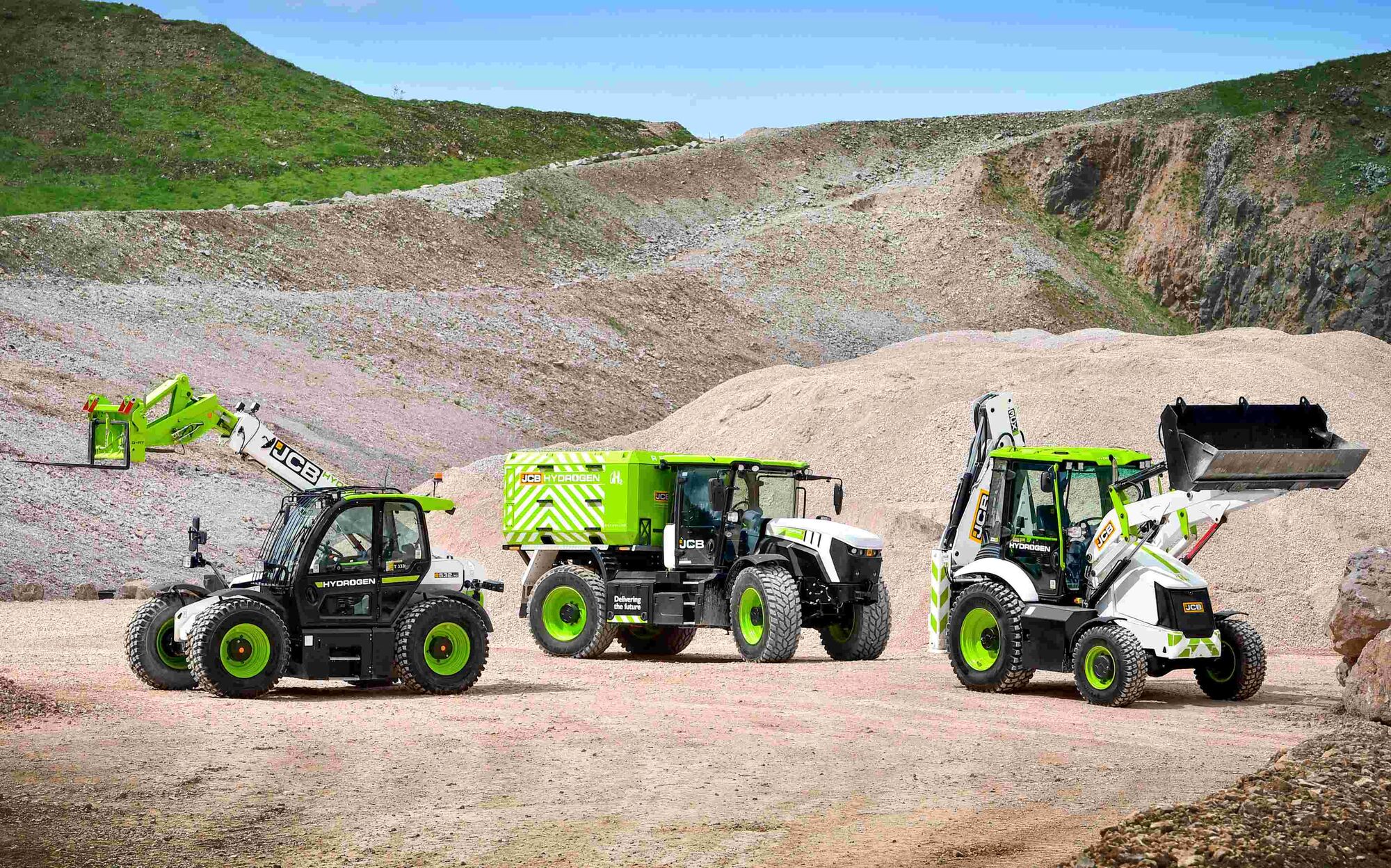
For powering off-road machinery, the government says it supports the use of hydrogen either in a fuel cell or in an internal combustion engine as decarbonisation options, alongside other technologies – presumably electricity and battery power. It says hydrogen could be particularly well-suited for larger, higher-powered machines that are mobile, have heavy duty cycles, require round-the-clock working, or operate on remote or grid-constrained sites.
The government published a call for evidence on off-road machinery decarbonisation options, which closed in March 2024, as reported on the blog at the time here.
The Department for Transport is developing an amendment to Regulation 94 of The Road Vehicles (Construction and Use) Regulations 1986, which currently does not permit the road use of hydrogen powered off-road machinery in the UK. This has been highlighted by off-road machinery manufacturers as a barrier to using hydrogen in this sector. This amendment is expected to enter into force in early 2025.
The government also intends to publish a report on water demand for hydrogen production which has been prepared by the Climate Services for a Net Zero World consortium, and it is working to understand the impact of regional water availability challenges in the context of a developing hydrogen economy.
Hydrogen can be produced in several ways, each with different environmental implications. Basically, splitting methane gives ‘grey’ hydrogen, while ‘blue’ hydrogen is produced by removing carbon from hydrocarbons and capturing it. Green hydrogen is made by electrolysing water, which requires considerable electrical power, perhaps harnessed by solar panels and wind turbines.
So rather ironically, as we have seen before with alternative energy sources such as some biofuels, adopting an eco-friendly alternative can have a negative impact on other resources.
The road to hydrogen is going to be an interesting journey.
Photo shows some of JCB’s machines designed to run on hydrogen.
● Subscribe to the blog here to receive regular news updates for tool hire and plant hire professionals.