
Electric crane does the heavy lifting
27 November 2024
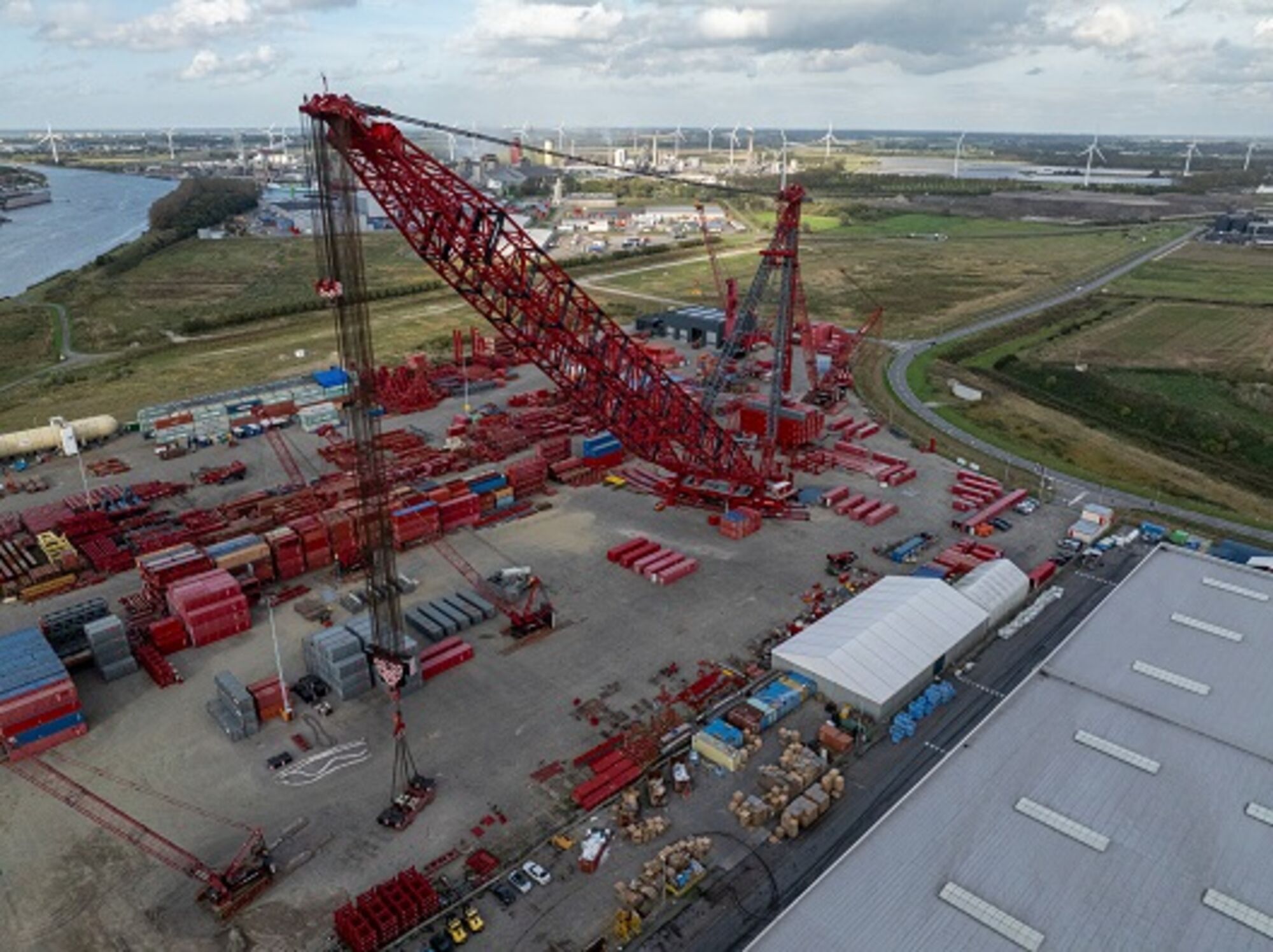
Its giant size might put it beyond the scope of most hire companies, but the Dutch manufacturer Mammoet’s SK6000 land-based electric crane shows how alternatives to diesel fuel can be developed for large machines.
Recent tests showed that the crane can operate directly from grid power or, at sites without power network access or with supply stability issues, via batteries or hydrogen generators.
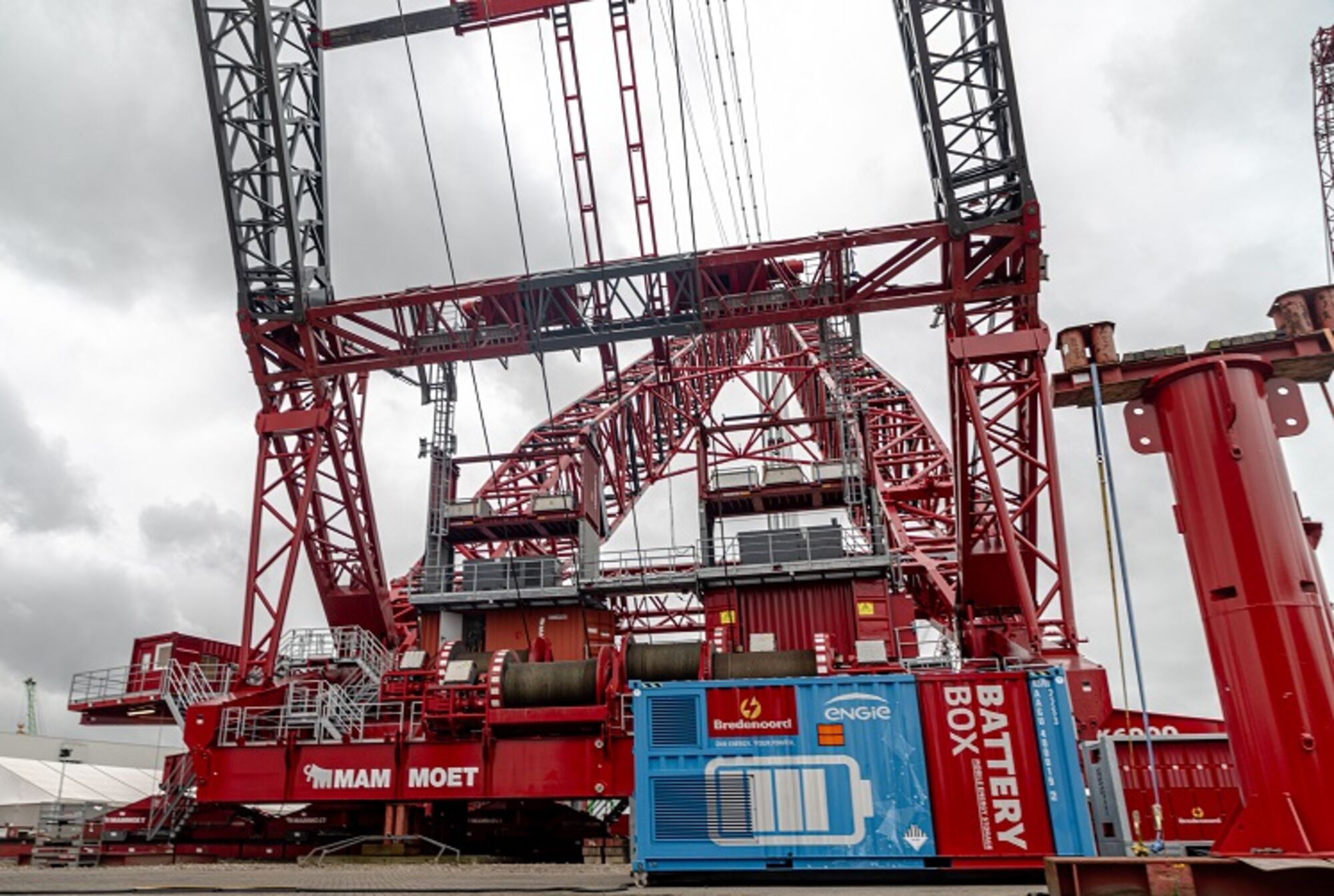
Testing was carried out at site in the Netherlands using two 600kWh battery boxes (pictured below) from power supply specialist Bredenoord, connected in series to deliver 1200kWh that approximates to the output for 20 electric cars.
Mammoet says that connection took a day shift, in parallel with test weight reconfiguration activity, showing that using batteries has minimal impact on site operations. It says that battery packs capable of operating the SK6000 are becoming widely available, in standard 20ft shipping container form factors, which can mobilised easily to and from site.
Niek Bezuijen, Global Sustainability Advisor at Mammoet, said: “Thanks to this test we can now say that the SK6000 operates fully zero-emissions on-site. Electrification isn’t a matter for the future of heavy lifting – it is needed now, and through innovations like this Mammoet can help its customers lead on safety, efficiency, sustainability and cost”.
By plugging into a medium voltage network, commonly available in heavy industry, the crane operates directly from the grid. At port facilities, so-called ‘shore power’ connections that are typically used to prevent cargo vessels idling at port, are capable of providing the necessary power.
Battery functionality offers a further option, with the additional benefit of being chargeable from lower power networks. The significant periods of time between individual ring crane lifts allow the chance for battery packs to recharge, says the company.
Hydrogen generators can also be used where neither grid power nor battery power is an option, for example at remote sites without significant infrastructure.
Mammoet sees the machine as delivering sustainability advantages to sectors such as offshore wind, oil and gas, nuclear and others.
● Subscribe to the blog for regular updates here.