
Connect to green power
15 October 2024
Participants in a recent webinar organised by the Supply Chain Sustainability School gave details of how new technology can be incorporated on a job site to reduce emissions and increase operational efficiencies.
Speaking at the event entitled ‘Getting Connected: Plant Infrastructure and Technology Onsite’, Thibaud Lefebvre, VP of Hilti Great Britain, said that the construction industry is responsible for 37% of emissions globally and consumes 50% of the virgin raw materials extracted for manufacturing, giving considerable scope for making reductions.
Hilti, he said, has sought to decarbonise its products in terms of design and manufacture. Improving power-to-weight ration made tools lighter while requiring fewer raw materials without comprising performance. Low-carbon resources are used where possible and a greater proportion of recycled materials are incorporated.
Thibaud said that Hilti’s Fleet Management programme can optimise tool performance by maintaining, servicing and repairing equipment, replacing them when they reach the end of their economic life when they are then repurposed or recycled as part of the circular economy.
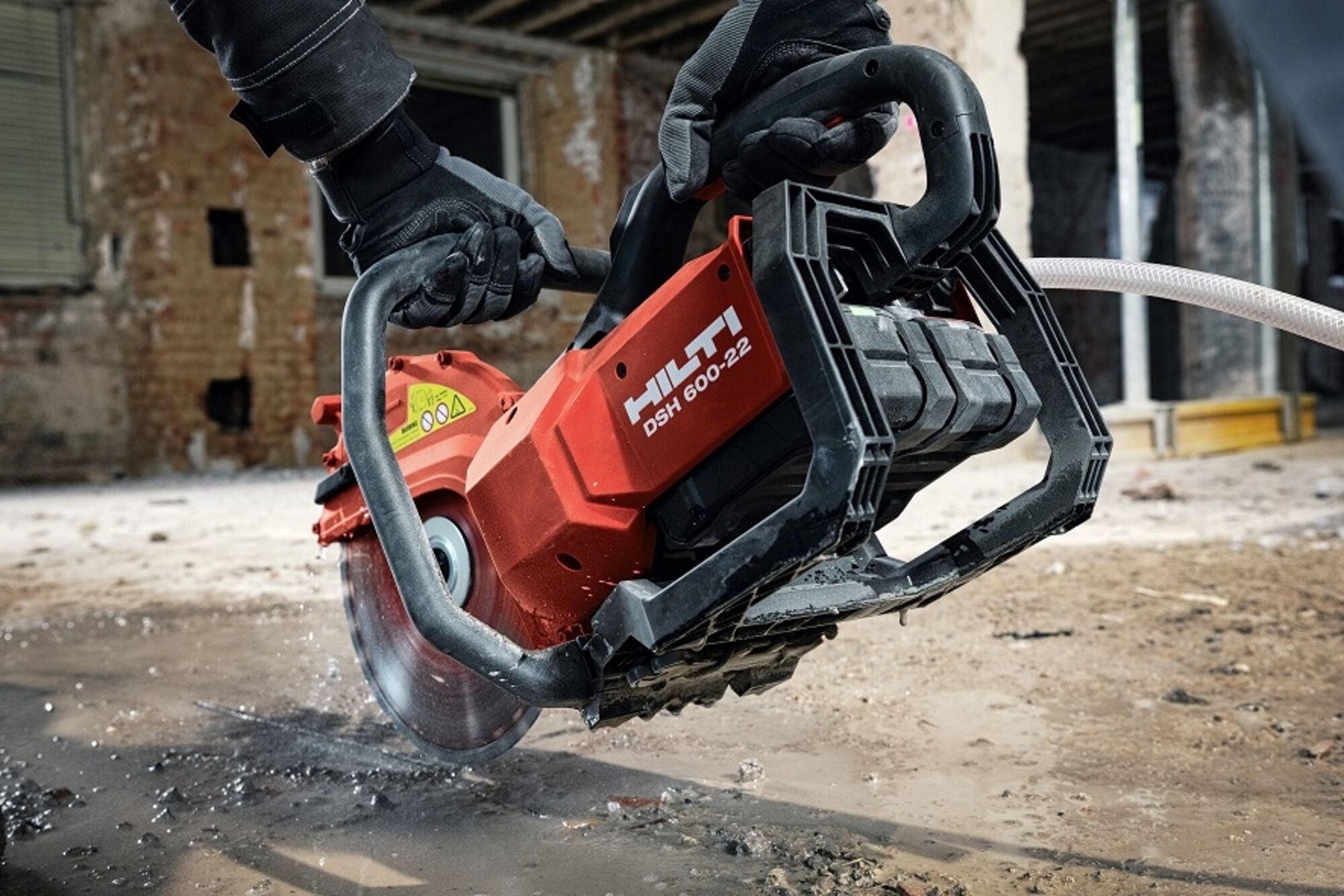
As an example, he said that the DSH 600-22 cordless cut-off saw (pictured above) on Hilti’s Nuron battery platform superseded its petrol counterpart by having a lower carbon footprint, requiring no fuel or oil, reducing maintenance and extending useful product life.
Hilti’s ON:Track! Management system could also help, said Thibaud, by using tags on equipment to monitor their location and full operating history. Maintenance schedules could be optimised as a result and little-used tools on a site could be reallocated elsewhere or, even, sent back as superfluous.
He said that in some cases, the number of tools on a site – and associated costs – could be reduced by up to 30%.
Mark Chamberlain, Business Development Director with Speedy Hire’s Power and Fuel Division and who previously worked with the Green Power Hire company that Speedy acquired in 2023, outlined a number of on-site power strategies.
He pointed out that there was no single best approach: every site and application differed in terms of location, duration, time of year and client requirements.
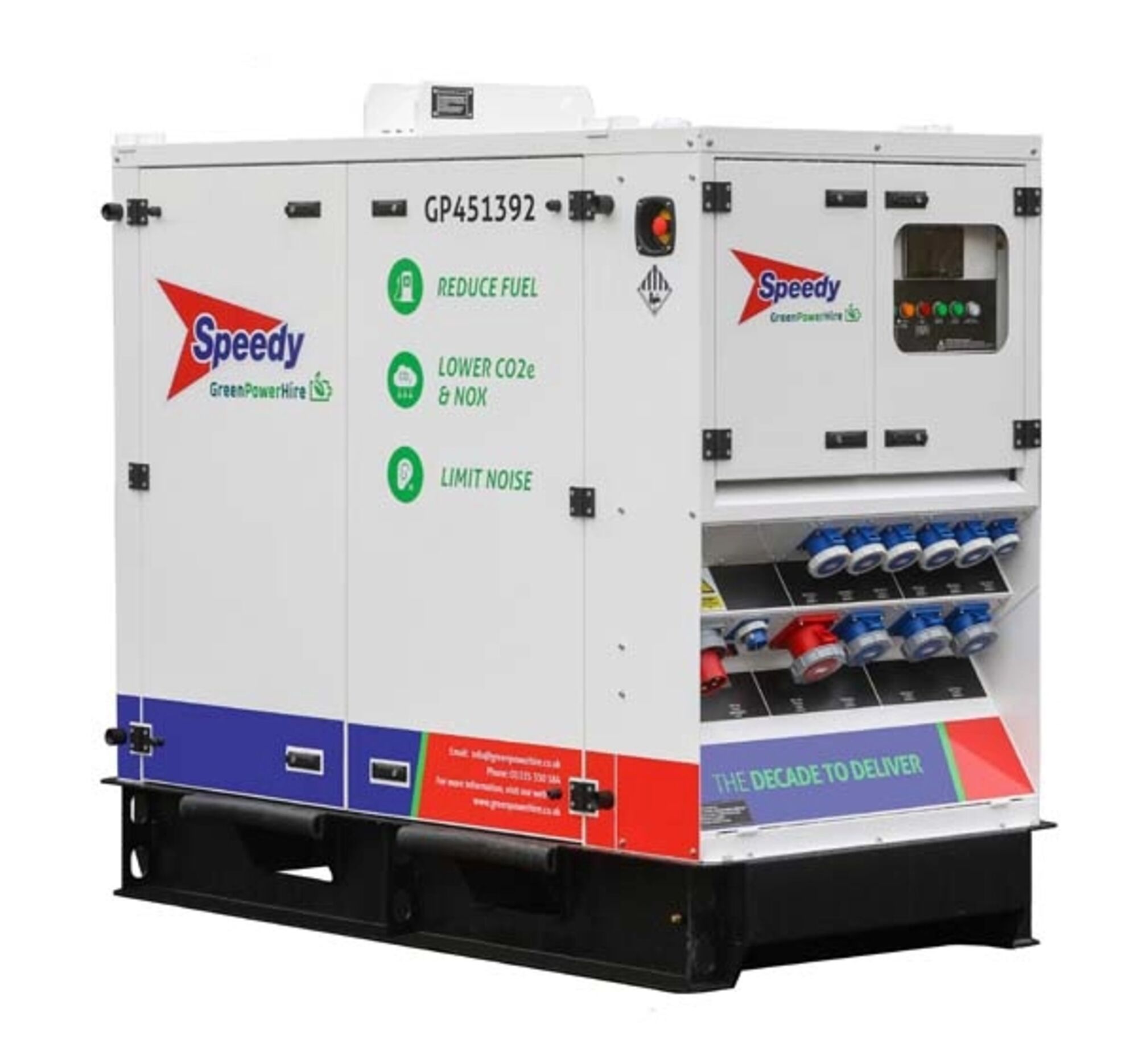
A hybrid installation comprising a diesel generator and a battery energy storage pack (such as Speedy's Battery Storage Unit, shown below) would optimise running and reduce fuel consumption as well as noise, as the generator would not need to run constantly. In such a system the generator could also typically be downsized.
The battery could be linked to green energy sources like solar panels and wind turbines, and the generator could run on HVO or biofuels.
Mark pointed out that such hybrid setups were not zero-emission in nature, so where total emission-free operation was needed, as in ultra-low emission zones, other approaches would be needed.
Hydrogen power sources might be an alternative, although Mark said that a hydrogen internal combustion engine would still need some oil or synthetic alternative as a lubricant. Hydrogen fuel cells were also available and were quiet in operation with few moving parts, but the fuel is currently expensive and requires careful management on site.