
Power from waste water
30 August 2024
A system has been developed to harness energy from waste water.
The Wastewater Fuels company’s Microbial Electrolysis Cell works by submerging stainless steel mesh rods in the water, which is then treated by microbes that consume organic matter. This is transformed into hydrogen ions, which are further converted into hydrogen gas and stored within the rod.
The equipment has no moving parts and individual rods in a system can be repaired and replaced individually, meaning a total shutdown is not required.
After having undergone several trials, the technology is to be used at a full-scale sewage facility to be deployed at RAF Digby in Lincolnshire. The developers, who are collaborating with Severn Trent Water, say the system can also be used for applications apart from water treatment, such as food waste, farm organic waste and industrial brewing waste.
Wastewater Fuels says that an installation can be self-powering, with hydrogen generation capability for compression, storage and distribution, and for generating electricity by feeding the hydrogen into fuel cells.
In the UK, about 2-3% of National Grid energy is dedicated to treating waste water. This requires 9,000 treatment sites across the country and represents a significant amount of energy used. The ultimate aim is to develop technology enabling a site to produce more energy than it consumes.
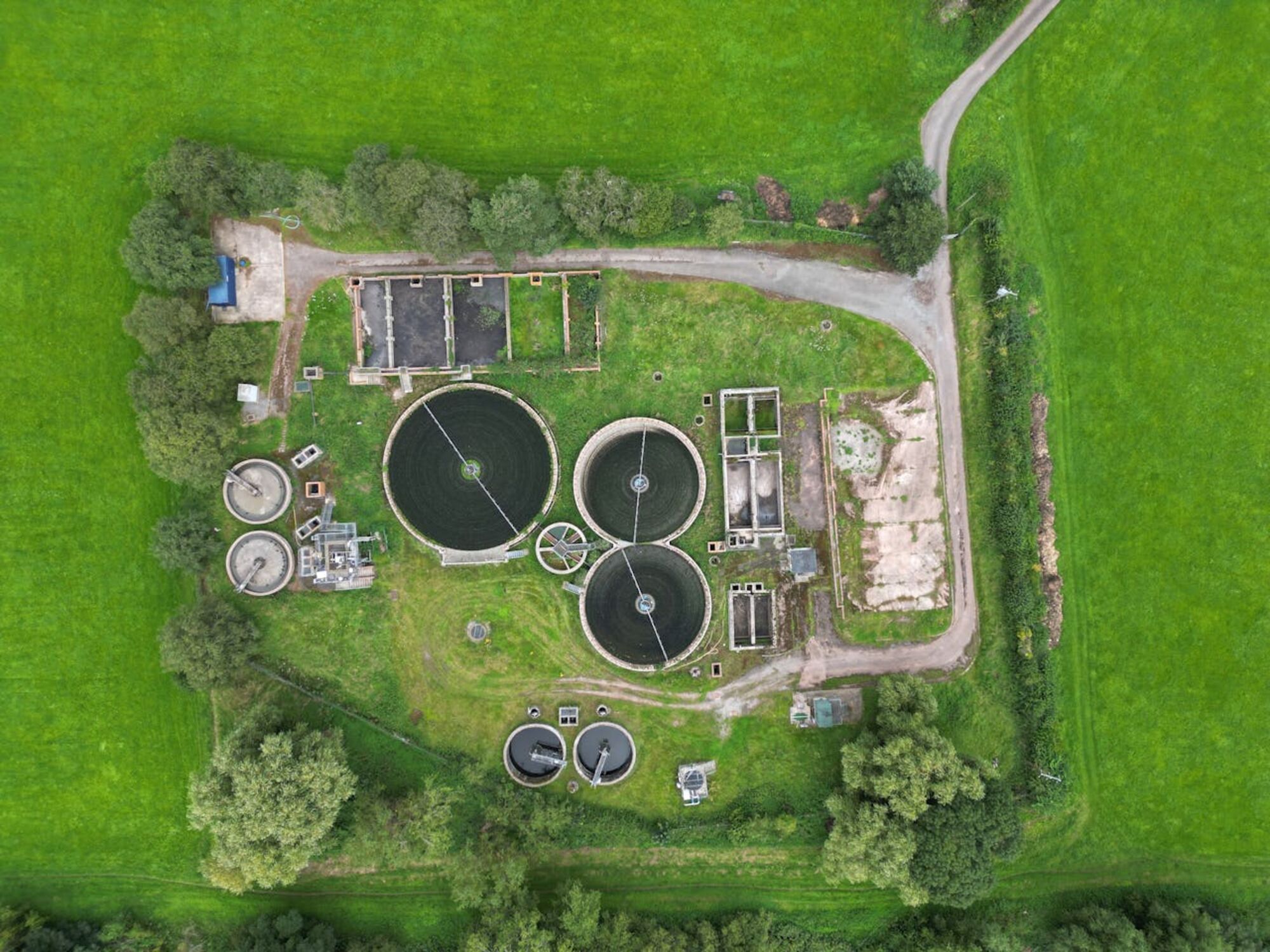
Photo shows a waste water treatment plant in south Wales: Sky Eye Imagery/Pexels