

Hydrogen in practice
21 August 2024
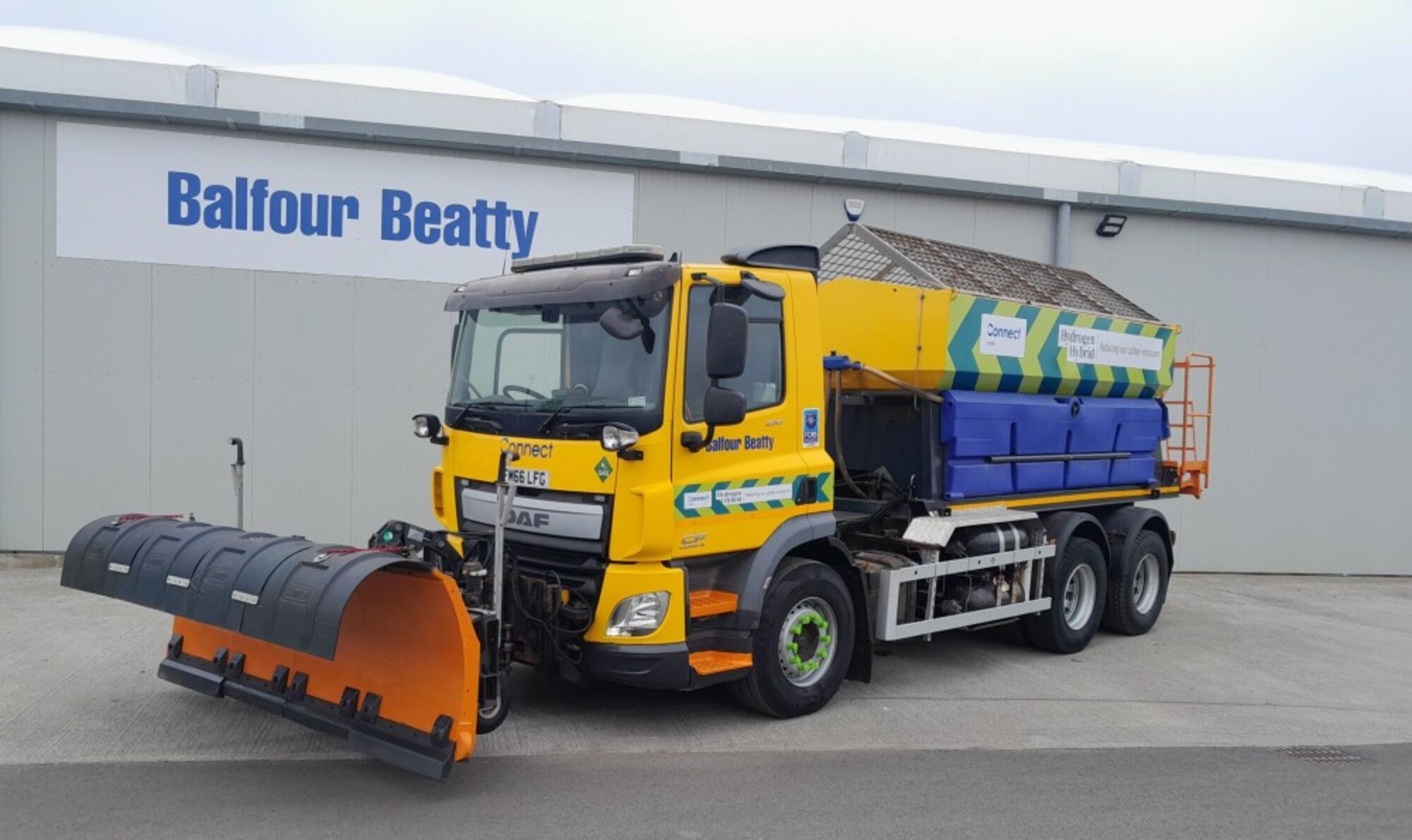
You know that summer is coming to an end when news stories arrive mentioning salt spreading and winter road maintenance.
Balfour Beatty’s M77 Hydrogen project is now live, which the company says marks a major step towards establishing Scotland’s first construction hydrogen hub demonstrating the viability of hydrogen technology for heavy plant and equipment.
Representing more than two years of collaboration with ULEMCo, Logan Energy, and PlusZero, and supported by both internal funding and £243,000 from the Scottish Government, the project involves retrofitting heavy vehicles with a hybrid hydrogen system, aiming to achieve a 30% reduction in carbon emissions.
So far, Balfour Beatty has successfully retrofitted two salt spreader HGVs and one Impact Protection Vehicle (IPV). It has set up green hydrogen supply, on-site storage and refuelling infrastructure, and is now analysing road test data to identify further improvements.
The spreaders show around a 26% carbon reduction during road tests, whilst the IPV is also running with reduced emissions, albeit at a slightly lower rate.
One of the main findings, says Balfour Beatty, is that retrofitting existing vehicles with hydrogen technology is straightforward and effective, providing significant carbon savings. Vehicles can switch to diesel if hydrogen is unavailable, reducing risks associated with hydrogen supply.
The vehicles will run in hydrogen mode when the engine reaches optimum running temperature and when engine regeneration is not happening, meaning the technology has the potential to be used across a wide variety of plant and equipment.
However, it is less useful for vehicles used intermittently where the engine does not stay at an optimum temperature for extended periods.
Also, the refuelling area is classified as an ATEX zone, a designated area where there is a risk of explosion due to the presence of flammable gases, vapours or dust.
To mitigate the risks, Balfour Beatty operatives have been provided with anti-static clothing. The company has also partnered with Hydrasun, a specialist in handling high-pressure gases, to provide hydrogen gas training so that teams can follow the required safety protocols.
The main challenge encountered in the project is the cost of retrofit plus the current limited availability of hydrogen refuellers and hydrogen gas. The hydrogen supply landscape in Scotland is expected to improve from 2026, enhancing accessibility, says the company.
The M77 Hydrogen project will continue throughout the winter maintenance cycle.