
Hire hidden in plain sight
5 October 2026
In a previous post arising out of a conversation with Phil Parker, CEO of Sunbelt Rentals UK & Ireland, he told me the industry could benefit from promoting itself more effectively. What did he mean?
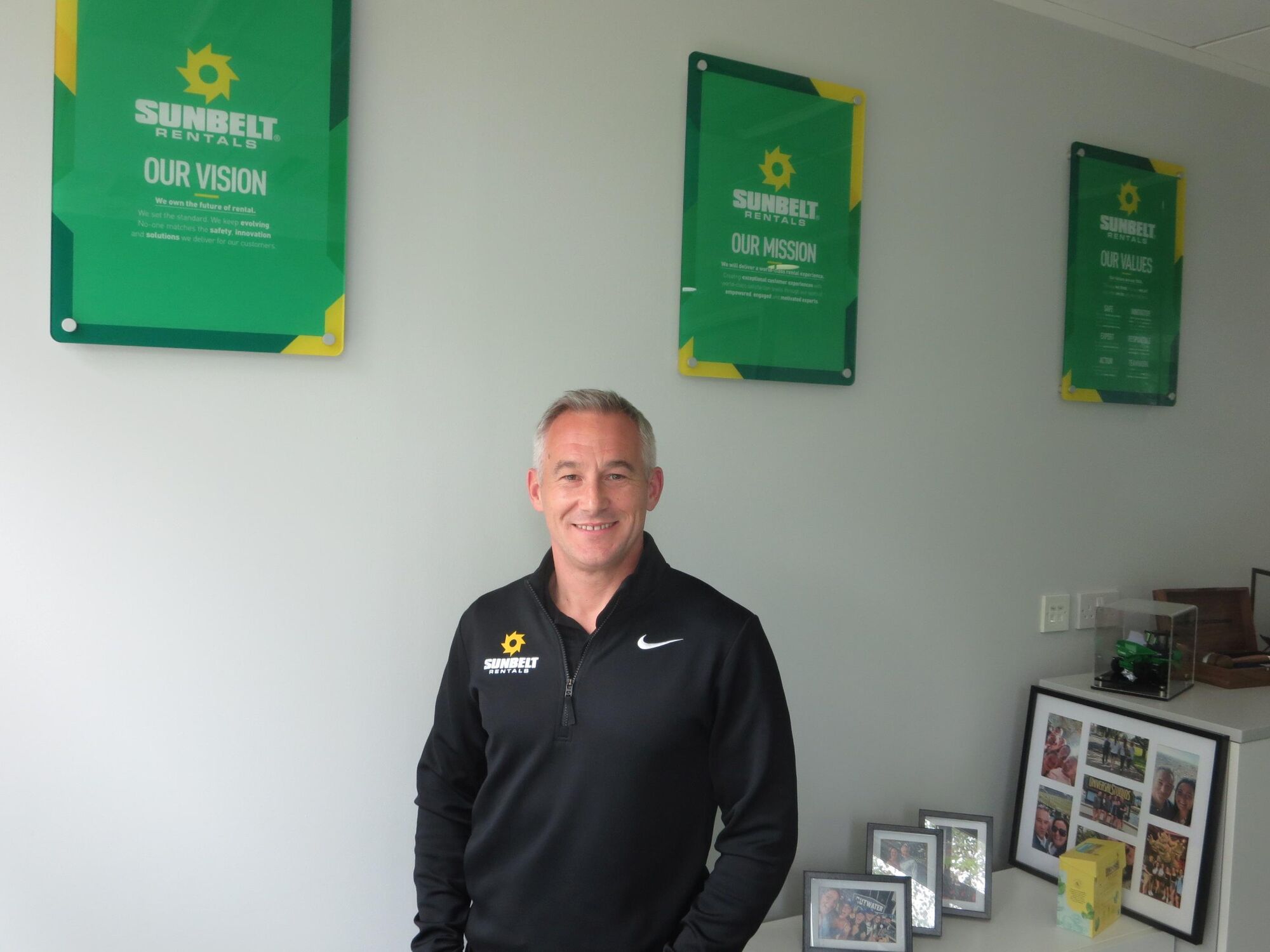
“The rental industry has become the most important hidden industry in the UK. Government and anyone outside this industry just associate what it does with ‘plant’ and an activity that’s just a part of construction," said Phil (pictured above). "However, construction represents now less than 45% of our revenues: we are also involved in infrastructure, facilities management, petrochemicals, events, film & TV, entertainments and energy transmission, for example.
“As a result, the equipment rental industry is actually the backbone of major projects and industries. But it’s still seen as a traditional construction ‘yellow plant’ business, and that image needs to change.
“It’s partly, if not mostly, our own fault. We haven’t until recently got together as bigger industry players and industry bodies to say: right, we are now going to share some data, like every other mature industry like building material suppliers and merchants, to articulate to government through one voice just how big and important we are in terms of employment, community impact, megaproject enablement, capex investment, manufacturing and product innovation. Often, our industry is the one that leads the way.”
Organisations like the CPA and HAE have certainly done much work in assessing the hire industry’s size and scope, and lobbying central government on issues like taxation and plant theft.
(Indeed, the CPA recently announced its intentions to work closely with training providers, colleges, awarding organisations, and other industry bodies to identify opportunities and partnerships, and to highlight the diverse career paths available across the industry - reported on the blog here.)
Phil believes that working together more closely can help deliver training and employment opportunities, especially following prime minister Andy Burnham’s pledge after his appointment in the summer to create more practically orientated education that meets specific market and regional needs. This intention was highlighted again at Labour's party conference last week.
“Andy Burnham has visited our large Chadderton hub depot in Greater Manchester on several occasions when he was city mayor. If you were to mention Sunbelt Rentals to him, he’ll know us," said Phil.
“Vocational training is something I believe very strongly in, bringing younger and older people into a business through an apprenticeship-type scheme giving them a real job and solving some of the skills shortages not just in our sector, but across industry.
“It needs a two-way conversation. Education is certainly going to be one of Andy Burnham’s key things to get right. Other European countries seem to do this better than the UK, which is still set in a ‘university is best’ mentality, but the world has changed.”
Phil believes that hire, which is integral to so many industries and markets, could help address wider social mobility challenges. For example, a school leaver with no academic qualifications could be offered workplace training and a route to a real career in similar fashion to the Youth Training Schemes (YTS) of the 1980s, through which many hire professionals entered the industry.
But he says the second element of the conversation has to be the hire industry telling government what training it needs to offer to meet these new challenges - and not just in a hire depot environment. He believes hirers can work with customers and other businesses they serve to identify their specific needs, too, such as in events, film and TV, sustainable power and so on.
It would clearly be a big undertaking. But in many ways, hire can be an exemplar: just as the industry is often upheld as the epitome of sustainability and the circular economy, by enabling maximum useful product life with minimal environmental impact, it can perhaps be a flagship in identifying and solving this major economic and social challenge.
“Collectively, hire companies have thousands of locations that can reach out to people all over the country, including areas with low industrial activity,” says Phil. “Government also needs to realise that hirers have thousands of workshops with very well-trained technicians and engineers. If there ever was a national defence issue, those people could turn their hands to repairing, say, drones and other equipment.
“All these capabilities reside in the equipment rental industry: they are just hidden from view.”
In 2020, Sunbelt Rentals and other hire companies certainly showed their capabilities in mobilising equipment and services urgently in the wake of the Covid pandemic, creating testing and vaccination centres nationwide, as reported on the blog at the time here (when others were at the helm of the business).
Perhaps Sunbelt and the wider hire industry will also have a key role to play in addressing future training and employment needs.
Photo © Alan Guthrie
● Subscribe free to the blog here to make sure you receive my regular news updates for tool hire and plant hire professionals.