
PASMA celebrates its half-century
18 September 2024
PASMA celebrated its 50th Anniversary with a glittering Conference & Gala Dinner on 12 September at the Royal Lancaster Hotel in London, attended by Association personnel past and present as well as Members and supporters.
And I was honoured to be invited, too.
Throughout a series of engaging, enthralling and entertaining conference sessions, the story of the association unfolded showing its development from being founded in 1974 as a purely manufacturer-focused organisation (the Prefabricated Aluminium Scaffolding Manufacturers’ Association) to its current broad industry outlook as the Prefabricated Access Suppliers’ and Manufacturers’ Association.
Today, PASMA’s focus encompasses a wide spectrum of interests, from standards of design, manufacture and assembly, to representing sectors like hirers and dealers, as well as training and personnel development at home and overseas.
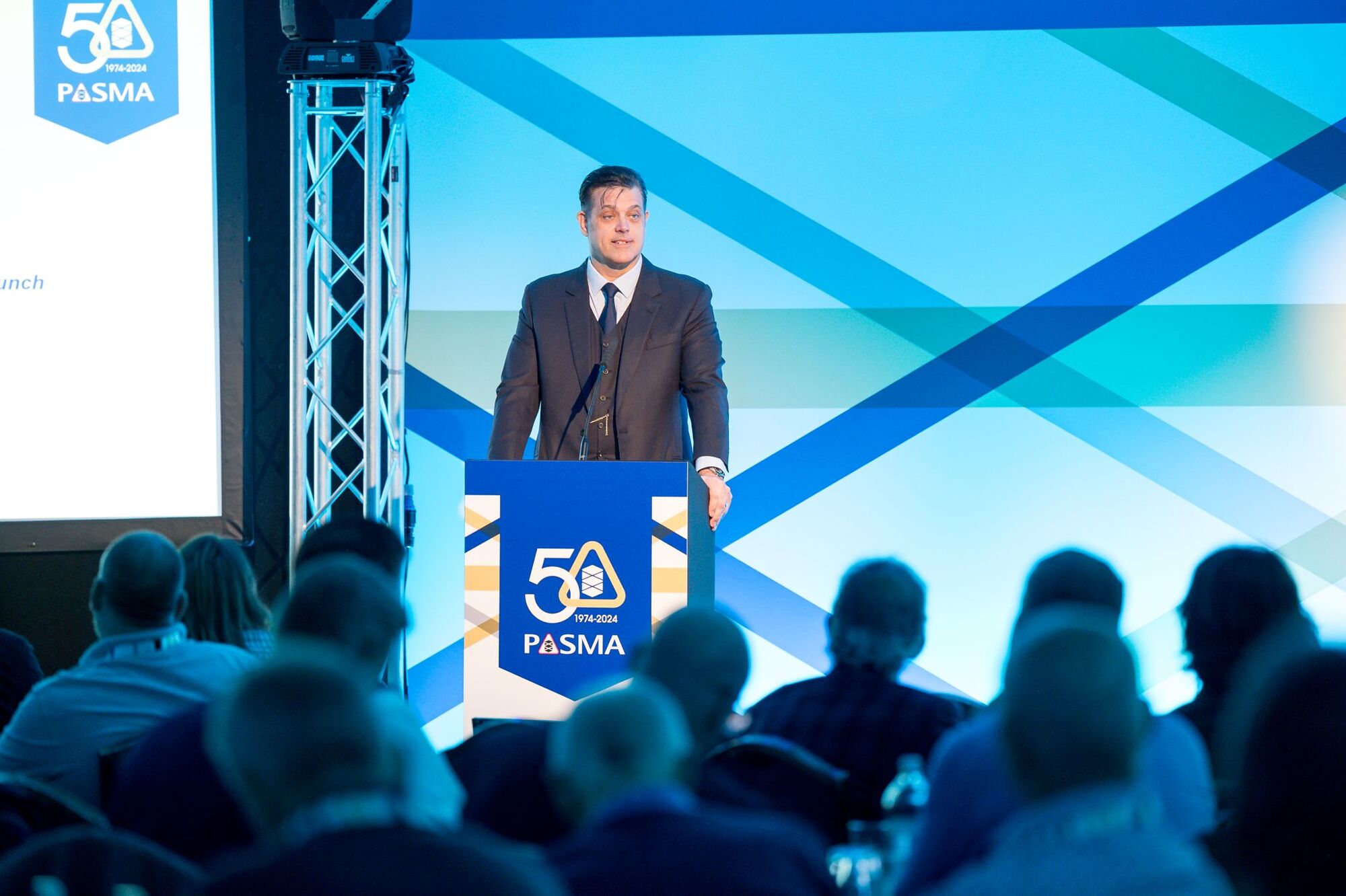
Current PASMA chairman Steve Booker (shown above), MD of Kentec Training, outlined the association’s growth from being run by industry volunteers in their spare time holding ad hoc meetings in hotel rooms, to its current status with full-time staff based at offices in Glasgow and overseen by managing director Peter Bennett OBE.
Steve also said that PASMA over the years has been able to follow and anticipate industry changes and technological advances, implementing strategies to move the sector forward. (More on this in a future blog post.)
In addition, he said, PASMA has played a key role in the formation of the No Falls Foundation charity, raising awareness of tower and ladder safety.
In a conference session entitled ‘Making towers safer: a history of innovation and progress’, Charlie Wright, CEO of Alto Access Products at Lakeside Industries, outlined the development of mobile towers from the first patented design by Wallace (Wally) Johnson in 1947 of a prototype aluminium tower for domestic use. The subsequent plethora of manufacturers and products for the emerging market meant that recognised standards of design and assembly would eventually become necessary, such as the HD 1004 European standard for towers eventually published in 1992.
Later developments included the 3T (through the trap) and AGR (advance guardrail) methods of safer tower assembly, and the introduction of dedicated low-level products like podiums and pulpit steps following the Work at Height Regulations in 2005.
John Darby, general manager at the Test & Research Centre, described the testing of towers through the decades, drawing on materials from the PASMA archives. In the 1960s and 1970s when photography was slow and expensive, some equipment failures were reported using hand-drawn diagrams and cartoons. Tower strength would be tested by gradually overloading them with weights until they failed, whereas now much of this work is done by computers and simulations. John suggested that AI (artificial intelligence) might also play a role in future.
Gail Hounslea, founding director of the online reseller Ladderstore, spoke of the work in developing PASMA’s Hirer Dealer Committee and creating its new knowledge academy offering to roll out e-learning amongst professionals.
She said that work at height constantly evolves as new products and applications emerge, from construction site tasks to installing domestic solar panels. Hirer/dealer members have to keep abreast of technology and training requirements, and are the invaluable link between manufacturers and end users.
During a conference session on the evolution of the PASMA training scheme, past association chairman Paul Pritchard described the early piecemeal state of training in the 1960s and 1970s when the only tuition available was offered sporadically by product manufacturers.
Paul outlined how trainers implementing PASMA’s Code of Practice and delivering its training courses in the 1970s and 1980s would use the best available technology at a time when equipment for desktop publishing was non-existent. Presenters would successfully use photographs, overhead projectors and carousels of 35mm slides – now the go-to approach is a PowerPoint presentation.
When PASMA produced a training video ‘Setting the Standard for Safety’ in the late 1970s, it wisely chose the VHS format rather than Betamax, as the former eventually won the battle of the systems.
Debbie Forbes, national training manager with HSS Training and vice chair of PASMA’s training committee, spoke of the expansion of training courses to encompass developments like the AGR and 3T systems, and the work involved in training the trainers. She also celebrated the fact that more women are now employed throughout the industry, and that last year saw PASMA train its one millionth delegate - a remarkable achievement by any standard.
Other conference sessions explored future trends and possible developments that we might see over the next 50 years. I’ll be reporting on those in another blog post.
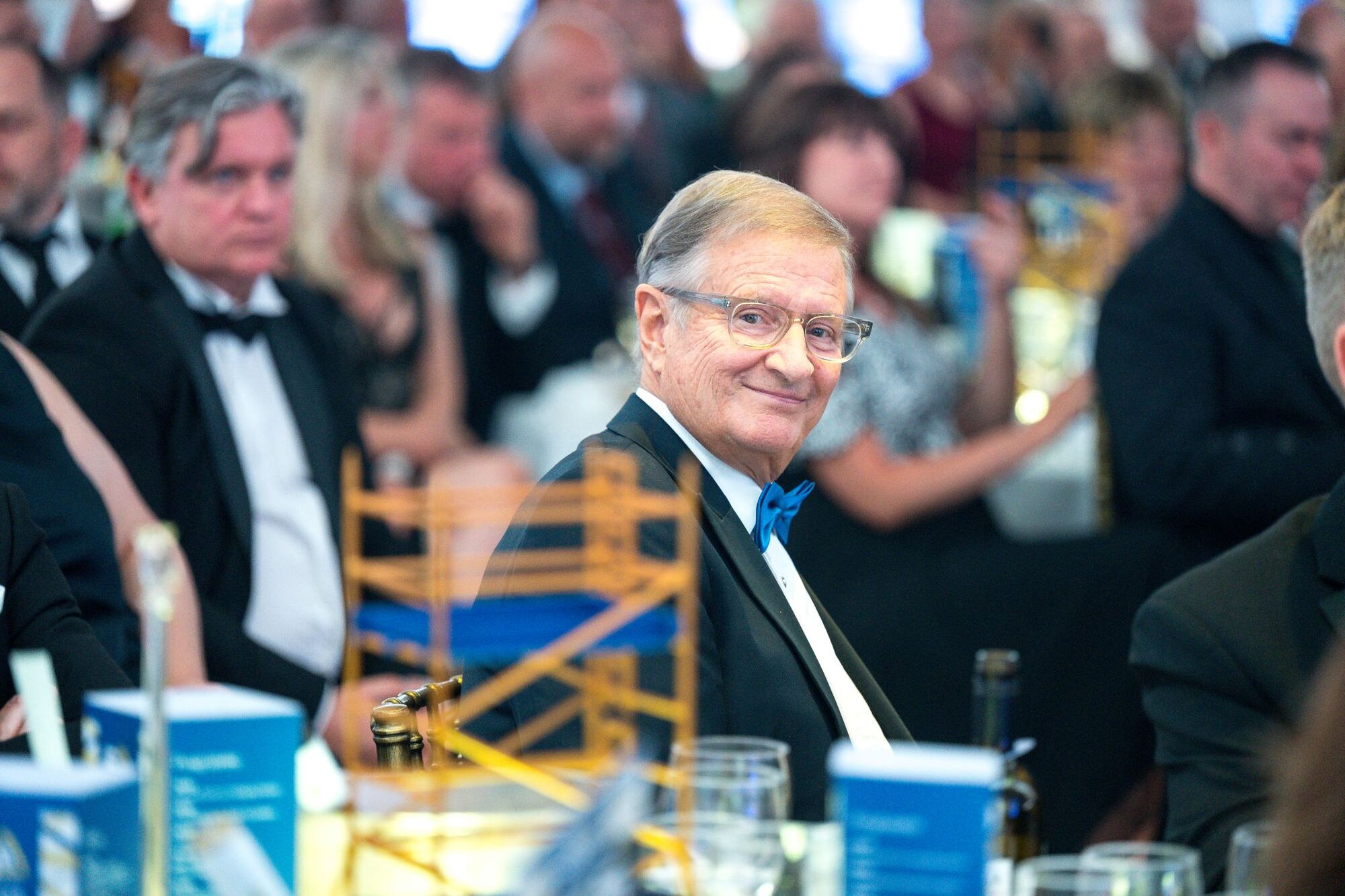
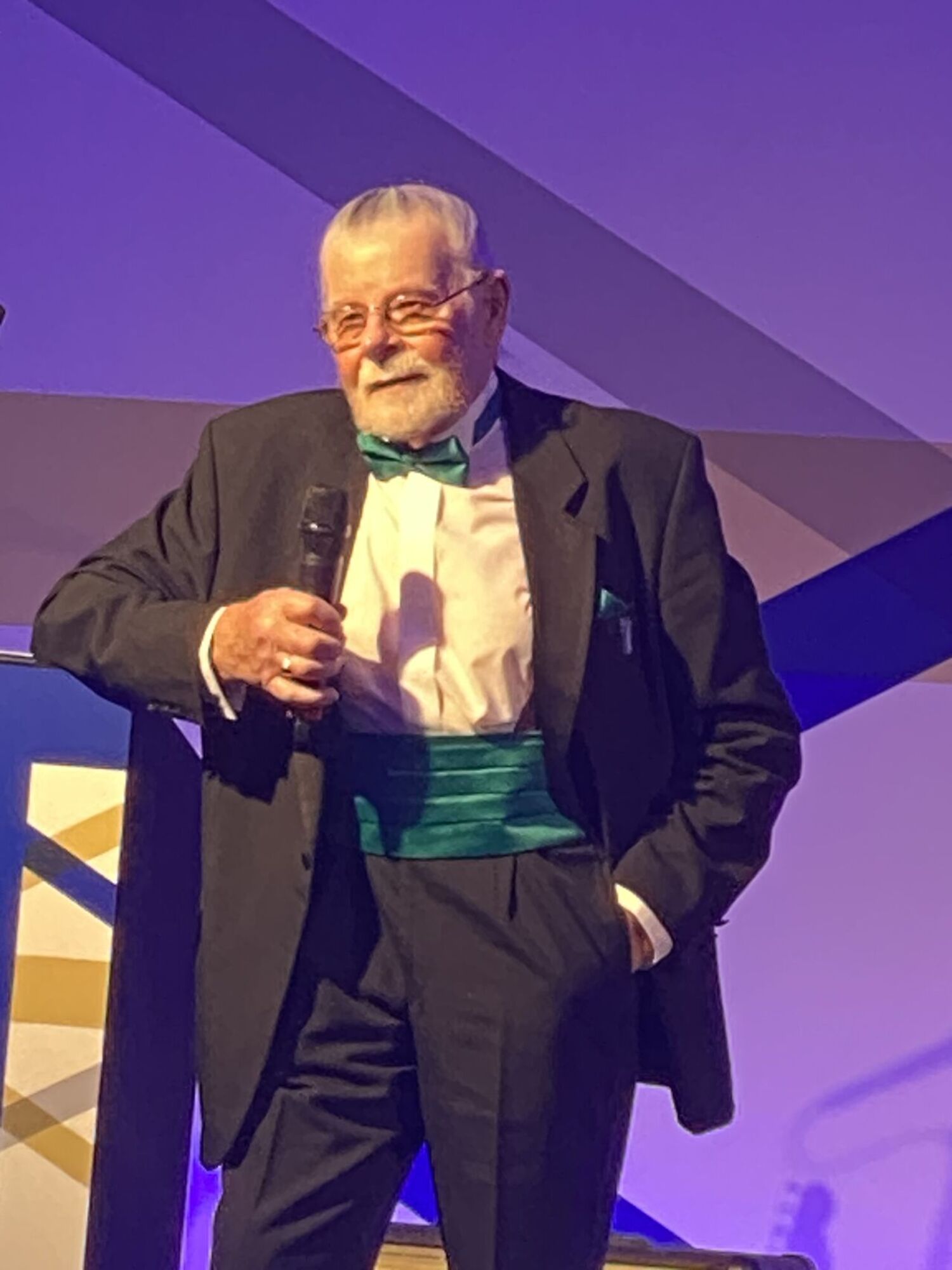
● During the glittering Gala Dinner and Awards evening hosted by the astonishingly talented magician Ben Hanlin, Lifetime Achievement Awards were presented to founding PASMA member Mike McGuire (pictured below, standing) and to former PASMA chairman Roger Verallo (pictured below, seated), who is managing director of Euro Towers.
Special recognition was also given to PASMA managing director Peter Bennett OBE, who chaired the association at the turn of the century and has dedicated more than 25 years to advancing tower safety.
Photos: PASMA